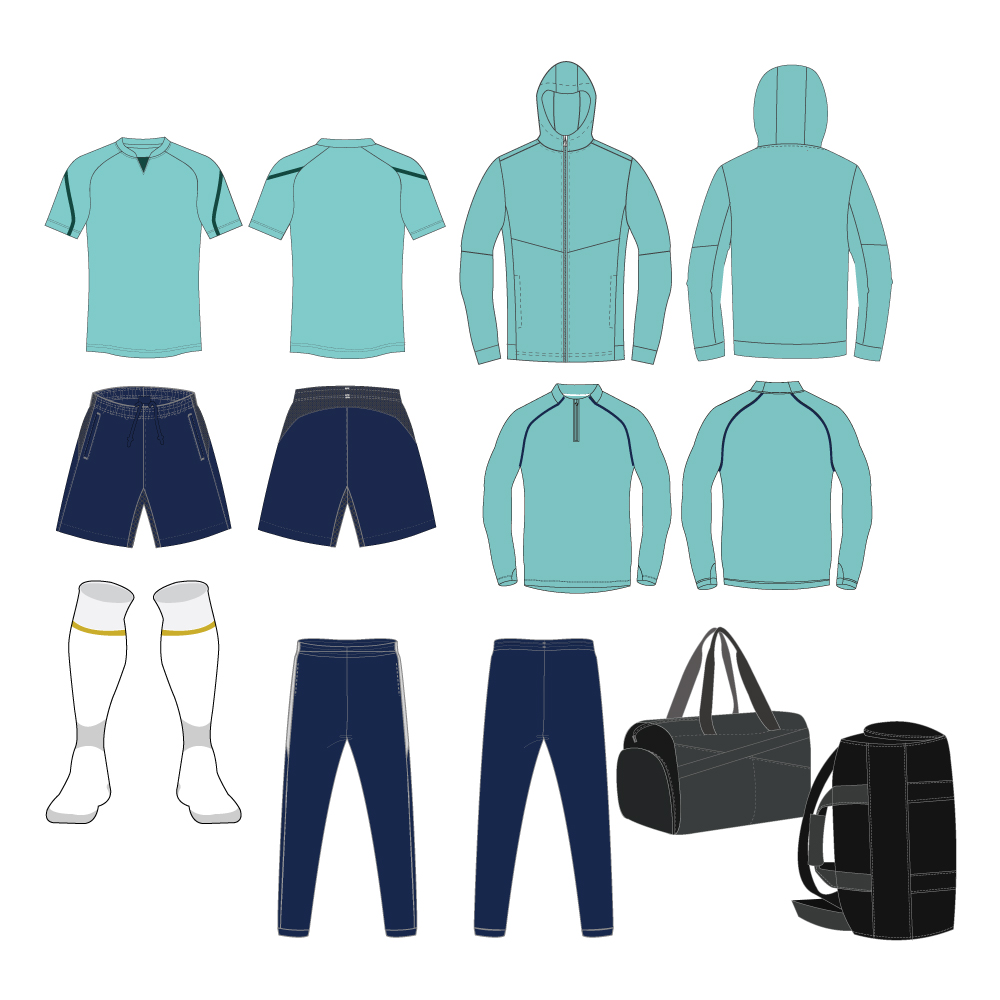
How to Choose Jersey Fabric: A Practical Buying Guide
How to Choose Jersey Fabric: A Practical Buying Guide
Whether you're customizing team uniforms for your squad or picking out a jersey for yourself, fabric is the core factor that determines your wearing experience. Choosing the right fabric allows you to truly unleash your potential on the pitch. This article takes a practical approach to help you clarify the decision-making process for selecting jersey fabric.
1. Start by Asking Yourself: What Is Your Use Case?
Different scenarios have vastly different requirements for fabric. Clarifying your needs is the first step toward making the right choice.
| Scenario | Core Needs | Fabric Recommendation |
|---|---|---|
| Professional matches / High-intensity competition | Ultimate moisture-wicking, lightweight, high elasticity | Profiled cross-section fibers + high-stretch fabric |
| Daily training / Amateur leagues | Cost-effectiveness, comfort, durability | Standard moisture-wicking fabric |
| Casual wear / Fan replica jerseys | Aesthetics, texture, print quality | Cotton-like fabric or regular polyester |
| Commemorative / Collector's items | Detail presentation, hand feel | Focus on fabric texture; moisture-wicking less critical |
2. Understanding Fabric Composition: Polyester Dominates
Over 95% of jerseys on the market today are made from polyester. The reason is simple: polyester does not absorb water (low moisture regain). Sweat is not absorbed by the fabric but is instead drawn out and evaporated quickly through capillary action between the fibers.
100% Polyester: The most mainstream choice. It offers moisture-wicking, quick-drying, abrasion resistance, and shape retention.
Polyester + Spandex/Elastane: Adding spandex gives the fabric elasticity. The higher the spandex content, the better the stretch. Typically, 5%–10% spandex provides good flexibility, making it suitable for high-intensity activities.
Avoid 100% Cotton: Cotton jerseys are comfortable in static conditions, but once you start sweating, they become soaked, heavy, and cling to the body, severely affecting athletic performance. Cotton is only suitable for casual wear or low-intensity activities.
3. Core Indicators: Evaluating Fabric Quality from Four Aspects
3.1 Moisture-Wicking Ability
This is the most essential function of jersey fabric. There are two ways to evaluate it:
Spreading: Place a drop of water on the inside of the fabric and observe how quickly it spreads outward. Faster spreading indicates better moisture-wicking performance.
Drying Speed: After wetting, how long does it take to dry? High-quality jersey fabric typically returns to a mostly dry state within 30 minutes.
Advanced Tip: Moisture-wicking functionality can be categorized as "permanent" or "non-permanent."
Permanent: Achieved through profiled cross-section fibers (cross-shaped, Y-shaped, etc.). This functionality lasts throughout the fabric's lifespan and does not diminish with washing.
Non-permanent: Achieved through post-treatment finishing agents. The functionality gradually decreases with repeated washing.
3.2 Fabric Weight (GSM)
GSM (grams per square meter) refers to the weight of the fabric per square meter and directly determines the thickness and feel of the jersey.
| GSM Range | Characteristics | Suitable Scenarios |
|---|---|---|
| 100–130g | Extremely lightweight, nearly translucent, excellent breathability | Professional matches, hot summer conditions |
| 130–160g | Lightweight yet balanced, combining comfort and durability | Ideal choice for most scenarios |
| 160–200g | Medium weight, more durable, substantial feel | Training jerseys, autumn/winter wear, casual styles |
| 200g+ | Heavyweight, cotton-like feel | Casual wear, lifestyle apparel; not suitable for sports |
Buying Advice: For amateur players and everyday use, the 130–160g range is the safest choice, offering both breathability and sufficient durability.
3.3 Stretchability
Stretchability determines whether the jersey will feel restrictive during movement. Testing is simple: stretch the fabric horizontally and vertically with your hands to feel the rebound strength and range of extension.
No stretch (100% polyester): Suitable for scenarios with limited range of motion; lower cost.
One-way stretch: Typically stretches horizontally but not vertically, meeting basic mobility needs.
Four-way stretch: Stretches well in both horizontal and vertical directions, moving freely with the body; ideal for high-intensity activities.
3.4 Breathability Features
Beyond the inherent breathability of the fabric itself, additional design features are worth considering:
Mesh: Honeycomb or hexagonal mesh structures created through weaving techniques, significantly enhancing ventilation.
Laser-cut perforations: Precision micro-holes laser-cut in high-sweat areas such as the underarms and back, providing targeted cooling.
Seamless / Heat-bonded seams: Eliminate stitching, reduce friction, and allow for breathability even at the seams.
4. Special Considerations: Eco-Friendly Fabrics and Antimicrobial Properties
Recycled Polyester (rPET): Made from recycled plastic bottles or post-consumer textile waste, rPET offers strong environmental credentials. Its performance is nearly identical to virgin polyester, and it has become increasingly popular in recent years. If sustainability is a priority for you, rPET fabric is an excellent choice.
Antimicrobial / Anti-odor Treatment: Some fabrics are treated with antimicrobial agents (such as silver ions) to inhibit bacterial growth and reduce body odor. This is a practical feature for frequent players or those who sweat heavily.
5. Pitfalls to Avoid: Common Misconceptions
Mistake 1: Thinner equals more breathable
Thinness and breathability do not always go hand in hand. Some lightweight fabrics have tight weaves and may actually be less breathable than moderately thick mesh fabrics with a looser structure. Pay attention to the fabric structure rather than focusing solely on thickness.
Mistake 2: Cotton is the most comfortable
Cotton is indeed comfortable when dry, but the opposite is true once you start sweating. In athletic scenarios, high-quality polyester fabrics have been optimized for next-to-skin comfort and can be just as—if not more—comfortable than cotton.
Mistake 3: More features mean better value
High-end fabrics do come at a higher price point. However, for most amateur players, mid-range moisture-wicking fabrics are more than sufficient. There is no need to blindly pursue the highest specifications.
Mistake 4: Fabric softener makes jerseys more comfortable
Fabric softeners clog the capillary channels within the fibers, directly impairing moisture-wicking performance. When washing jerseys, be sure to avoid using fabric softener.
6. Brands and Customization: If You're Sourcing for a Team
If you are customizing jerseys for your team, beyond the fabric itself, there are several additional factors to consider:
1. Minimum Order Quantity (MOQ) and Cost
High-end fabrics often require higher MOQs and come at a higher unit cost. Balance your budget with performance needs and choose a fabric that suits your team's overall level.
2. Compatibility with Printing
Dark-colored fabrics are better suited for direct-to-garment (DTG) printing, while light-colored fabrics work well with sublimation transfer printing. Different fabrics have varying adhesion levels for prints, so confirm compatibility with your supplier before proceeding.
3. Sample Confirmation
Before placing a large-volume order, always request a sample. Touching the fabric firsthand, trying it on, and testing its moisture-wicking performance is far more reliable than relying solely on specifications.
Glad you can see this, if you need a professional jersey manufacturing supplier, please feel free to contact me.
May
E-mail: may@junmaosports.com
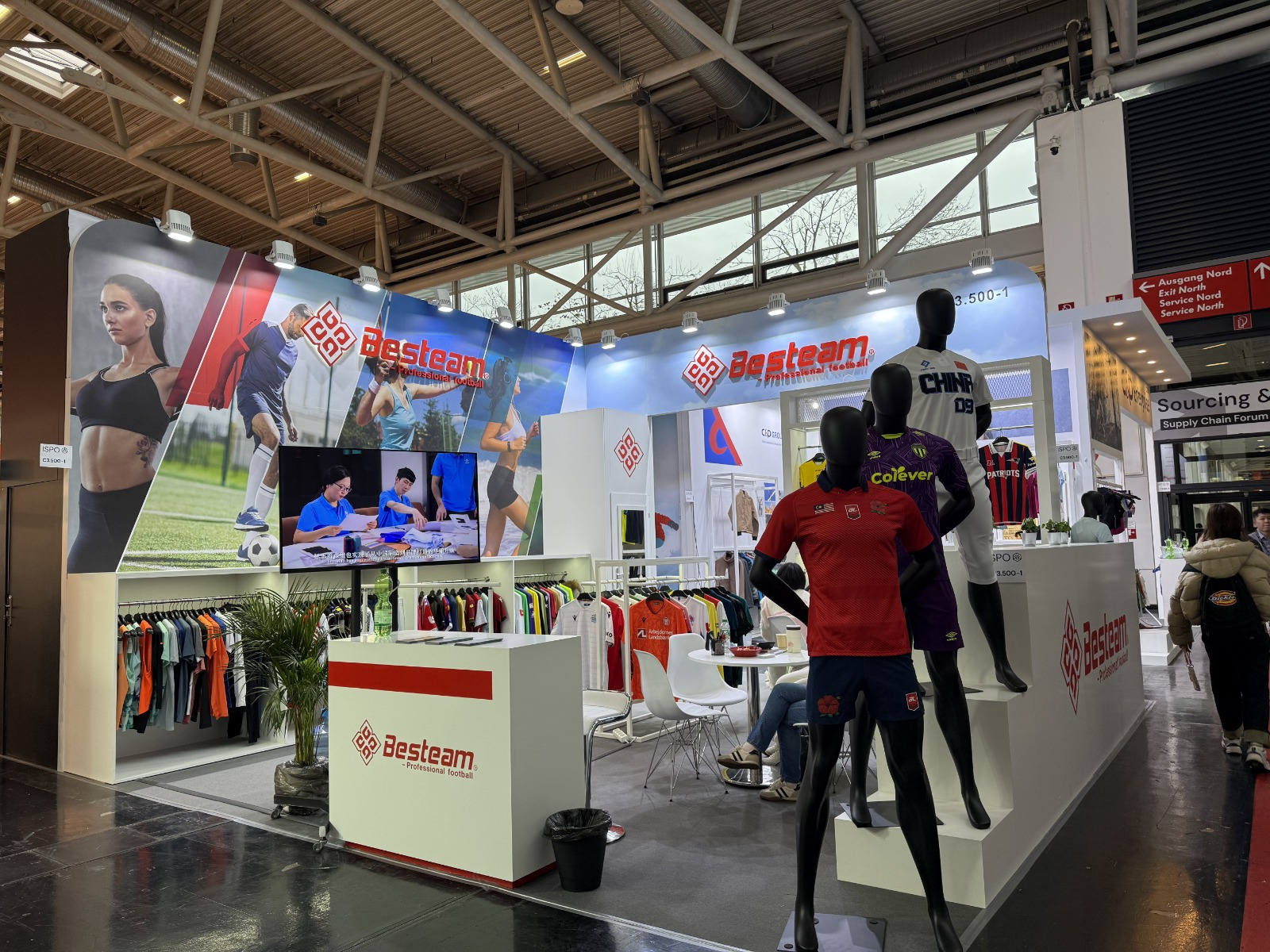
Professional sportswear manufacturer
Xiamen Besteam Int’l Co., Ltd. is a professional sportswear manufacturer, we mainly engage in the production of football jersey, training uniforms, running clothes, soccer shoes, soccer jersey, sports socks and accessories etc.
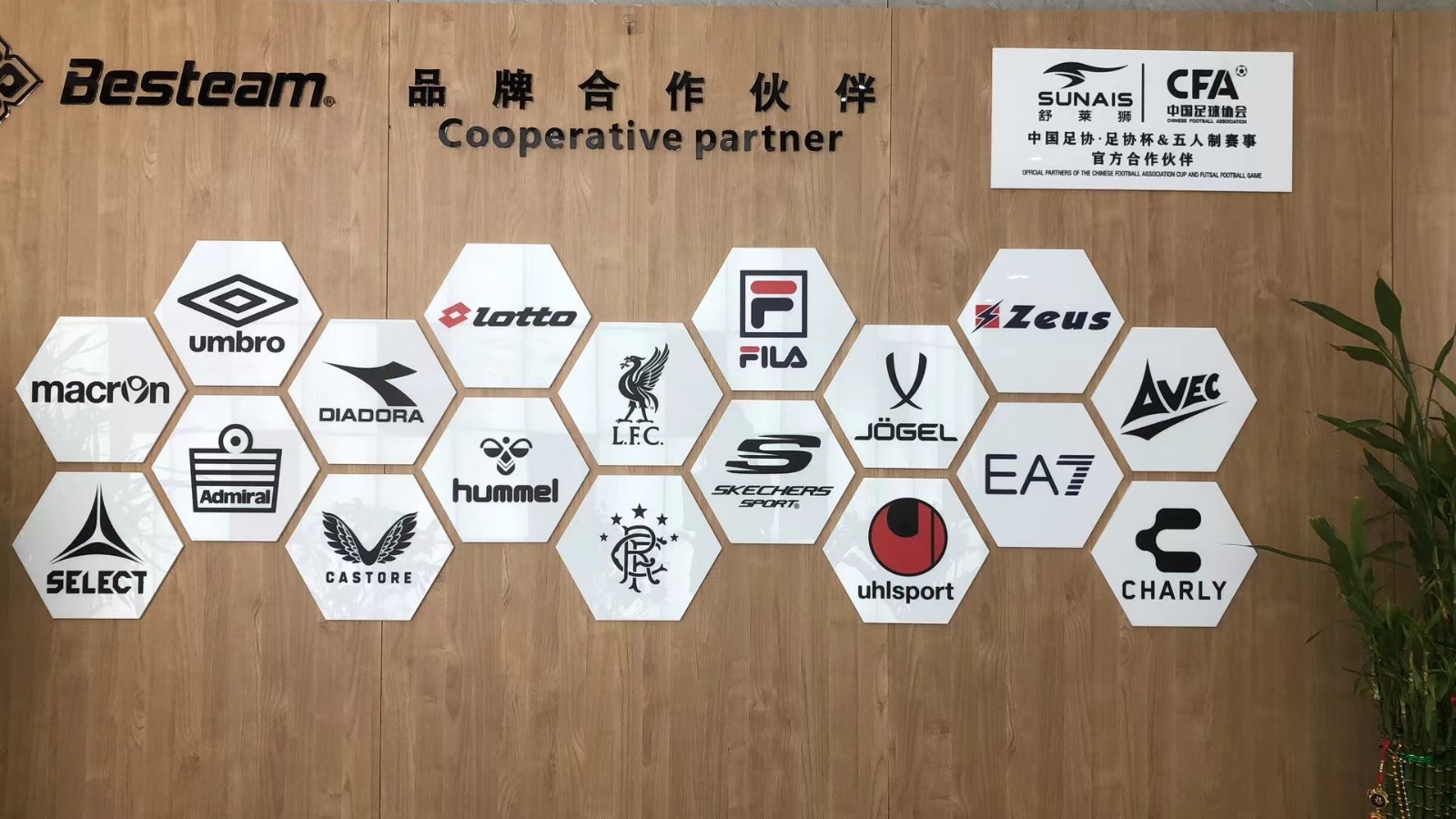
Cooperative partner
Besteam serves many well-known sports brands and teams, and is one of the suppliers of international competition teams such as the Olympic Games. It has 13 years of production experience and a professional design team, as well as high-standard production requirements. We can provide a variety of services such as fabric customization, OEM, ODM, etc.
If you have never customized a clothing, please don’t worry, I will communicate with you according to the following process.
Send me your design/jersey photo and inform the quantity you need to purchase. If you need to reproduce, please mail the sample to me, or send me the detailed value of the sample.
After reviewing the picture, I will ask you step by step about the clear details you need to customize the jersey.
After confirming the design and production process, please let me know the address where I will mail the clothes to you to confirm the logistics method and calculate the shipping cost.
Please choose your payment method, such as online shopping platform/credit remittance/payple
Send you a quotation sheet
Pay the fee and start production